Role
Product Designer
Industry
Education and Startup
Duration
6 Months

Fidel Portal is an LMS and school management platform for Ethiopian schools. I designed the product from research to developer handoff, with a focus on clear workflows, role-based access, and scalability.
1. Understanding the Users
The platform supports six roles with different goals and permissions:
Super Admin: Manages schools, subscriptions, platform settings, and reports.
School Admin: Manages staff, students, classes, schedules, and school operations.
Teacher: Creates courses, assignments, attendance, grades, and feedback.
Student: Accesses lessons, submits work, checks grades, and tracks progress.
Parent: Monitors attendance, grades, assignments, and school updates.
Nurse: Manages health records, clinic visits, medication, and follow-ups.
The main challenge was creating one connected system without overwhelming users or exposing restricted information.


2. Research and Design Process
I started with stakeholder discussions, competitor research, and workflow analysis to understand how schools manage learning, administration, communication, and health data.
I created a role-permission matrix to define what each user could view, edit, or manage. This became the foundation for the navigation, dashboards, and system architecture.
I mapped key flows such as school setup, class creation, assignment submission, attendance, grading, parent monitoring, and clinic visits.
The process included:
User and competitor research
Information architecture
User flows
Low-fidelity wireframes
High-fidelity UI design
Responsive layouts
Interactive prototypes
Usability testing
Design system creation
Each dashboard was designed around three questions: what is happening, what needs attention, and what action should happen next.


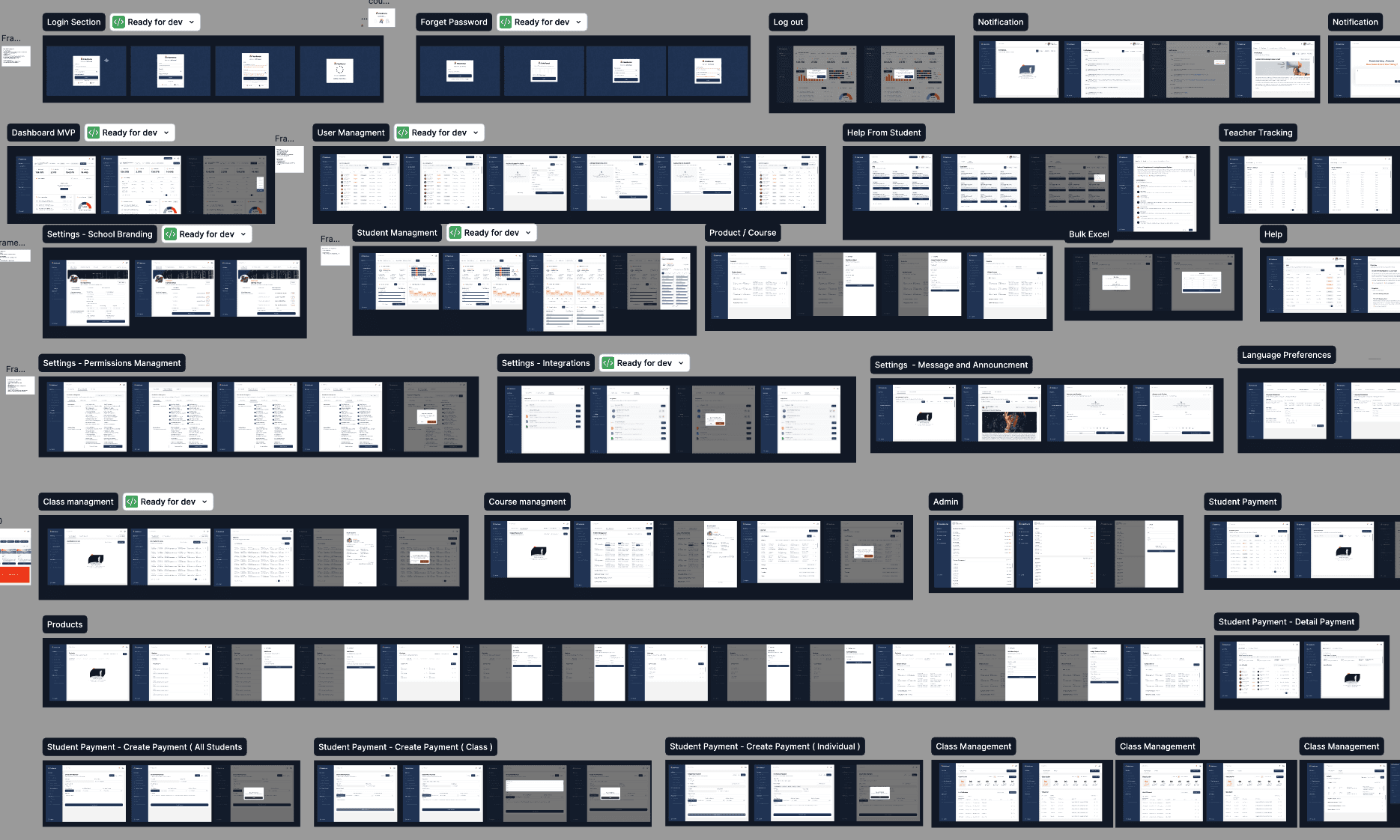
3. Final Solution and Handoff
The final design combines learning, school administration, parent access, communication, and student health management in one consistent platform.
Key solutions included:
Role-based navigation and permissions
Task-focused dashboards
Clear assignment and attendance states
Reusable tables and form patterns
Responsive desktop and mobile layouts
Accessible components
Secure health and student records
Confirmation and audit patterns for sensitive actions
I prepared the design for development with responsive screens, component states, design tokens, user flows, permission rules, validation behaviour, and edge cases.
The result was a scalable LMS foundation that supports six user roles while keeping each experience focused, secure, and easy to use.


